leather strap
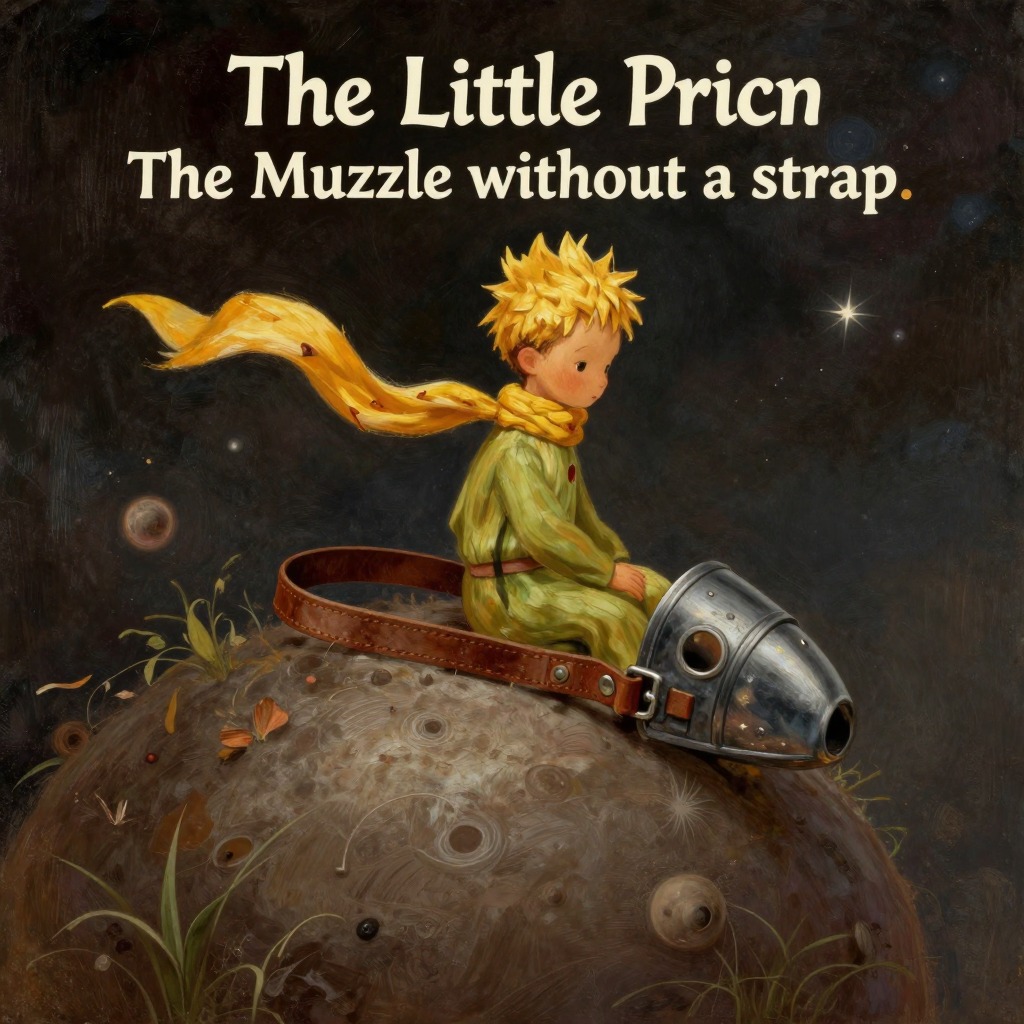
The leather strap is a small, overlooked object that becomes the hinge of the story's deepest uncertainty. When the Narrator drew the muzzle for the Little Prince's sheep, he forgot to add the leather strap that would fasten it. This single omission means the sheep may never have been able to be properly muzzled, and therefore may have been free to eat the Little Prince's rose. The forgotten strap transforms a simple drawing into a source of permanent, irresolvable doubt that colors the entire universe for those who love the Little Prince.
The Forgotten Detail
The leather strap was meant to be part of the muzzle the Narrator drew for the sheep. In the moment of drawing, the Narrator simply forgot to include it. The strap was the essential fastening component—without it, the muzzle could not be secured on the sheep's head. This oversight is not presented as a deliberate choice or a creative decision, but as a pure act of absent-mindedness. The Narrator himself acknowledges this as "one extraordinary thing," recognizing that the forgotten strap has consequences he cannot control. The strap's absence is not corrected; it remains missing forever, and the drawing is never revised.
The Consequence of Absence
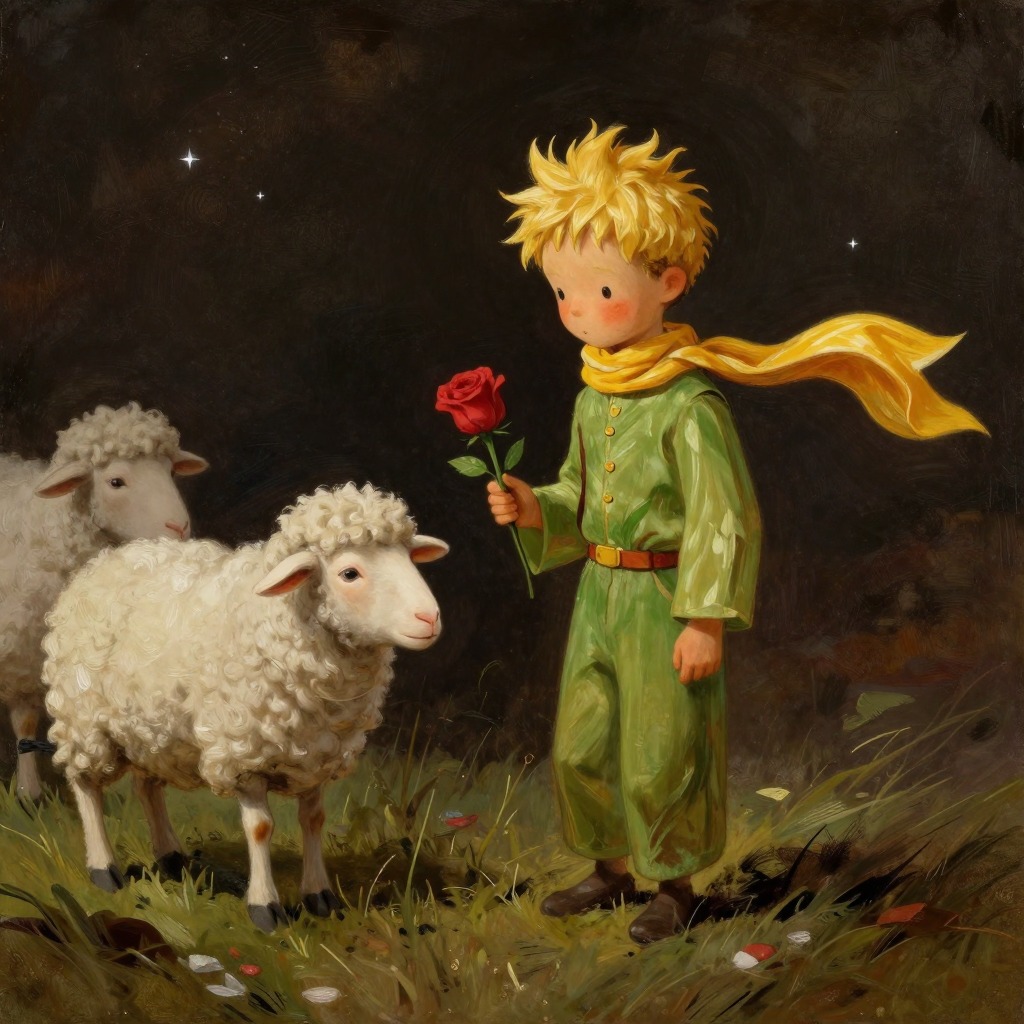
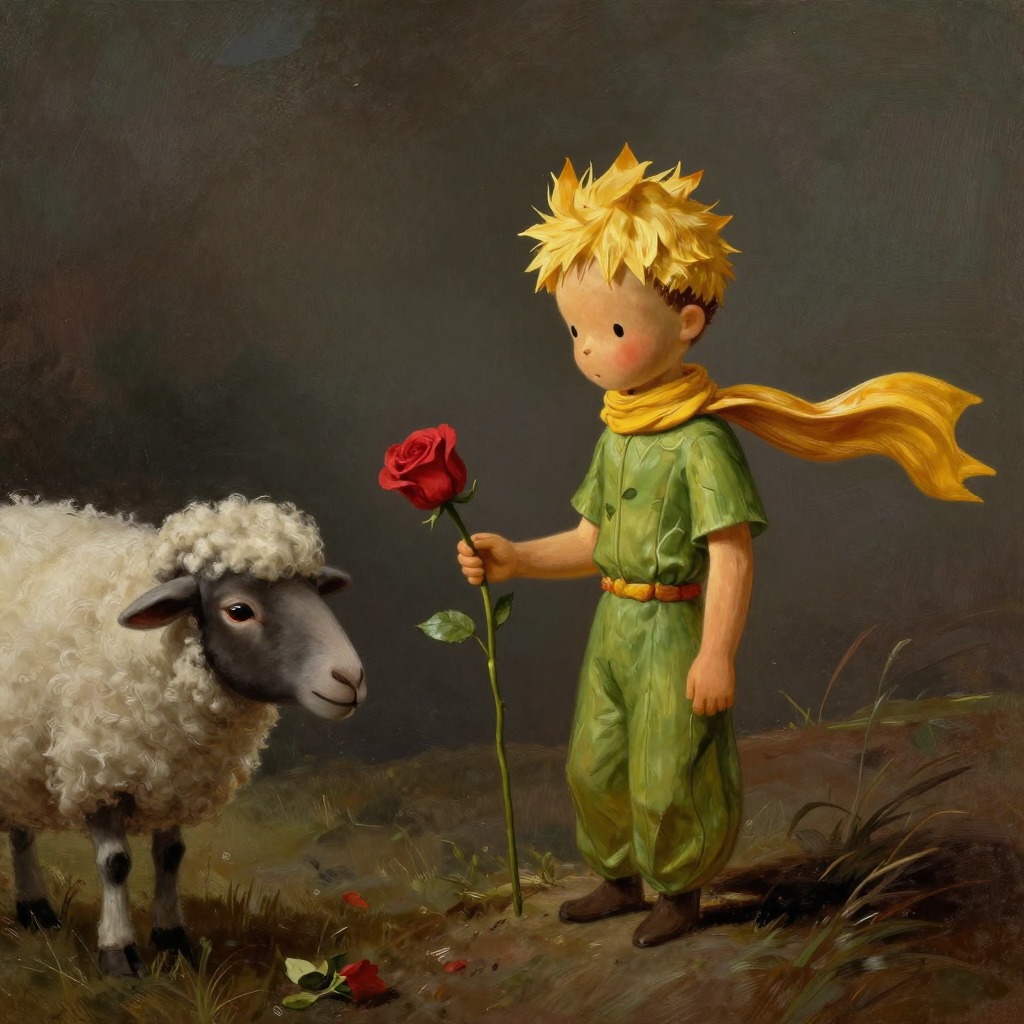
Because the leather strap was never drawn, the Narrator is left wondering what is happening on the Little Prince's planet. The sheep may have eaten the flower. The Narrator oscillates between two possibilities: on hopeful days, he tells himself that the Little Prince shuts his flower under its glass globe every night and watches over his sheep carefully, and then he is happy, and the stars laugh sweetly. But on other days, he imagines that on some evening the Little Prince forgot the glass globe, or the sheep got out without making any noise in the night, and then the little bells of the stars are changed to tears. The leather strap's absence is the material cause of this oscillation—it is the concrete detail that makes the sheep's escape physically possible.
The Symbol of Uncertainty
The leather strap becomes the emblem of a great mystery. The Narrator declares that for those who love the Little Prince, nothing in the universe can be the same if somewhere, in an unknown place, a sheep that was never seen has—yes or no?—eaten a rose. The strap is the object that makes this question unanswerable. It is not a philosophical abstraction but a practical, physical detail: a piece of leather that was never drawn, a fastening that was never made. The strap's absence transforms the entire cosmos into a space of unresolved possibility. The Narrator asks readers to look up at the sky and ask themselves whether the sheep has eaten the flower, and to see how everything changes depending on the answer. No grown-up will ever understand that this is a matter of so much importance—but the leather strap, in its smallness and its absence, is what makes it important.
The Enduring Presence of an Absence
The leather strap is never mentioned again after the Narrator notes its absence. It does not appear in any later scene, and it is never drawn. Yet its absence persists as a permanent condition of the story's emotional landscape. The strap is the object that cannot be fixed, the detail that cannot be added retroactively. It is the reason the Narrator's sorrow is comforted only a little, not entirely. The strap's absence is the material trace of the Narrator's imperfection, the proof that even the most careful storyteller can make a mistake that changes everything. And because the strap was never drawn, the fate of the rose remains forever unknown, and the stars remain forever ambiguous—sometimes bells, sometimes tears.